
An ovarian cyst is a fluid-filled sac that forms on or within the ovary. It often develops as part of the normal menstrual cycle and often resolves on its own without treatment. Sometimes, though, it can persist, growing and causing symptoms that require medical attention.
At Pacific Healthcare Specialist Centre (Women’s Clinic), your care is based on how your cyst evolves. Follow-up imaging, symptom changes, and clinical findings are reviewed together so ovarian cyst treatment or removal is done only when needed.
If you have concerns, you may wish to consult for further evaluation.

Ovarian Cyst Treatment
An ovarian cyst is a fluid-filled sac that forms on or within the ovary. It often develops as part of the normal menstrual cycle and often resolves on its own without treatment. Sometimes, though, it can persist, growing and causing symptoms that require medical attention.
At Pacific Healthcare Specialist Centre (Women’s Clinic), your care is based on how your cyst evolves. Follow-up imaging, symptom changes, and clinical findings are reviewed together so ovarian cyst treatment or removal is done only when needed.
If you have concerns, you may wish to consult for further evaluation.
If a cyst becomes large, twists (ovarian torsion), or bursts open (rupture), you may experience:
You should seek prompt medical attention if you experience more severe signs and symptoms of an ovarian cyst, such as:

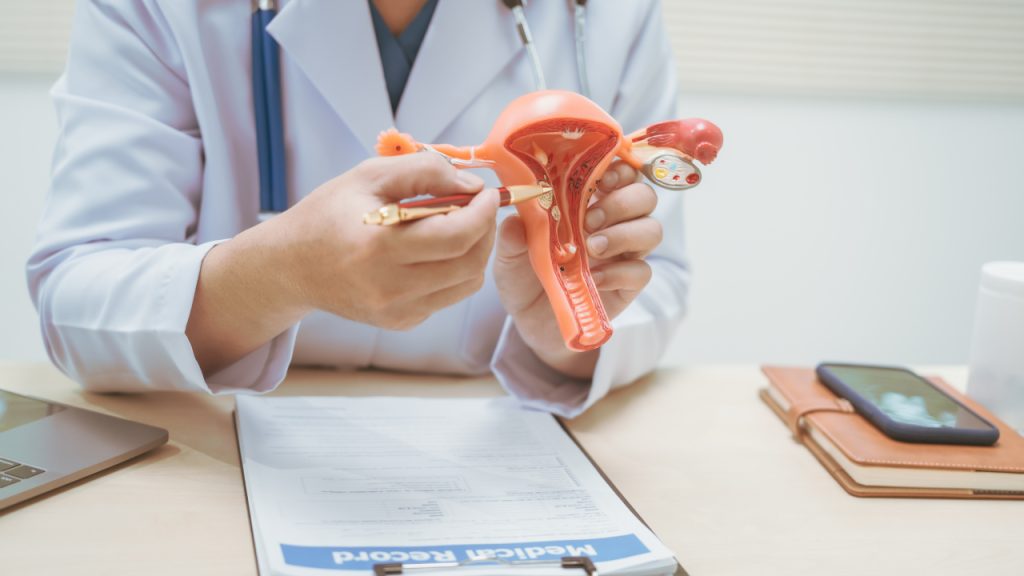
At Pacific Healthcare Specialist Centre (Women’s Clinic), our obstetricians may use the following tests to assess for the presence of ovarian cysts:
High-risk pregnancies can be caused by various factors, including maternal health conditions, pregnancy-related complications and external factors:
A laparoscopic (keyhole) surgery is often used for smaller or less complex cysts.
During the procedure, several small cuts are made in your abdomen. A thin tube with a camera (laparoscope) is then inserted to help us view the cyst in real time. In most cases, only the cyst is removed, and the ovary is left in place.
This type of ovarian cyst removal surgery usually involves:
A laparotomy may be recommended if the cyst is large, complex, or difficult to remove safely using keyhole methods.
A single, larger cut is made in your abdomen to allow direct access to the ovary. This gives us more room to examine and remove the cyst.
You may take longer to recover after a laparotomy, compared to laparoscopic surgery.
In most cases, only the cyst is removed, and the ovary is left in place. This is called an ovarian cystectomy.
Your ovaries play a role in releasing eggs and producing hormones. Preserving the ovary generally helps maintain these functions.
If the cyst affects a large part of the ovary, or if there are other concerns, part or all of the ovary may need to be removed. Even then, the remaining ovary can often continue to support ovulation and hormone production.
We’ll discuss all your options at your consultation, especially if you’re planning for pregnancy.
Care at Pacific Healthcare Specialist Centre (Women’s Clinic) is led by Dr. Nurhidayati Binte Mohamed Suphan, a Consultant Obstetrician & Gynaecologist trained in Singapore and the UK. She has experience in managing various gynaecological conditions in both public and private healthcare settings, including the National University Hospital, and has been involved in clinical research and medical education.
If you have concerns or have been told you have an ovarian cyst, speak with us to understand what it means and what to do next.

Menopause can reduce or eliminate endometriosis symptoms for some women due to the drop in estrogen levels, which fuels endometrial growth. However, those taking hormone replacement therapy (HRT) may see symptoms return as HRT reintroduces estrogen into the body.
Your healthcare provider can help you decide on the best options for managing endometriosis during and after menopause.
There is no exact size we look for to operate. Larger cysts (e.g. above 5 cm) may be considered for surgical evaluation, but decisions depend on multiple factors such as symptoms and imaging findings.

Copyright © 2026 Pacific Healthcare Specialist Centre (Women's Clinic)